Strengthen Coastal Education
Lasting conservation depends on knowledge, skills and local leadership. Using the ocean as a classroom, this programme helps youth, community members and practitioners build the confidence and experience to lead change. It is delivered together with the KCW-CBO, the Kuruwitu BMU, schools and local practitioners, with OA as facilitator and programme partner. Learning and lessons-sharing are cross-cutting and intergenerational, not youth-only.
Social Pillar
Strategic Plan 2020-25 | Pillar of Development
Social Development Through Education & Community Harmony
Ensuring that the results of our conservation actions contribute to doing no harm and leaving no one behind by bringing additional household benefits and social welfare through education, improved nutrition, and community harmony.
Education for All
Ocean literacy programs reaching 10,000+ learners across all age groups and backgrounds.
Community Harmony
Intergenerational knowledge exchange and storytelling through Project REEL Kilifi.
Household Benefits
Improved nutrition through permaculture education and sustainable resource management.
What We Do
Ocean Education Programs
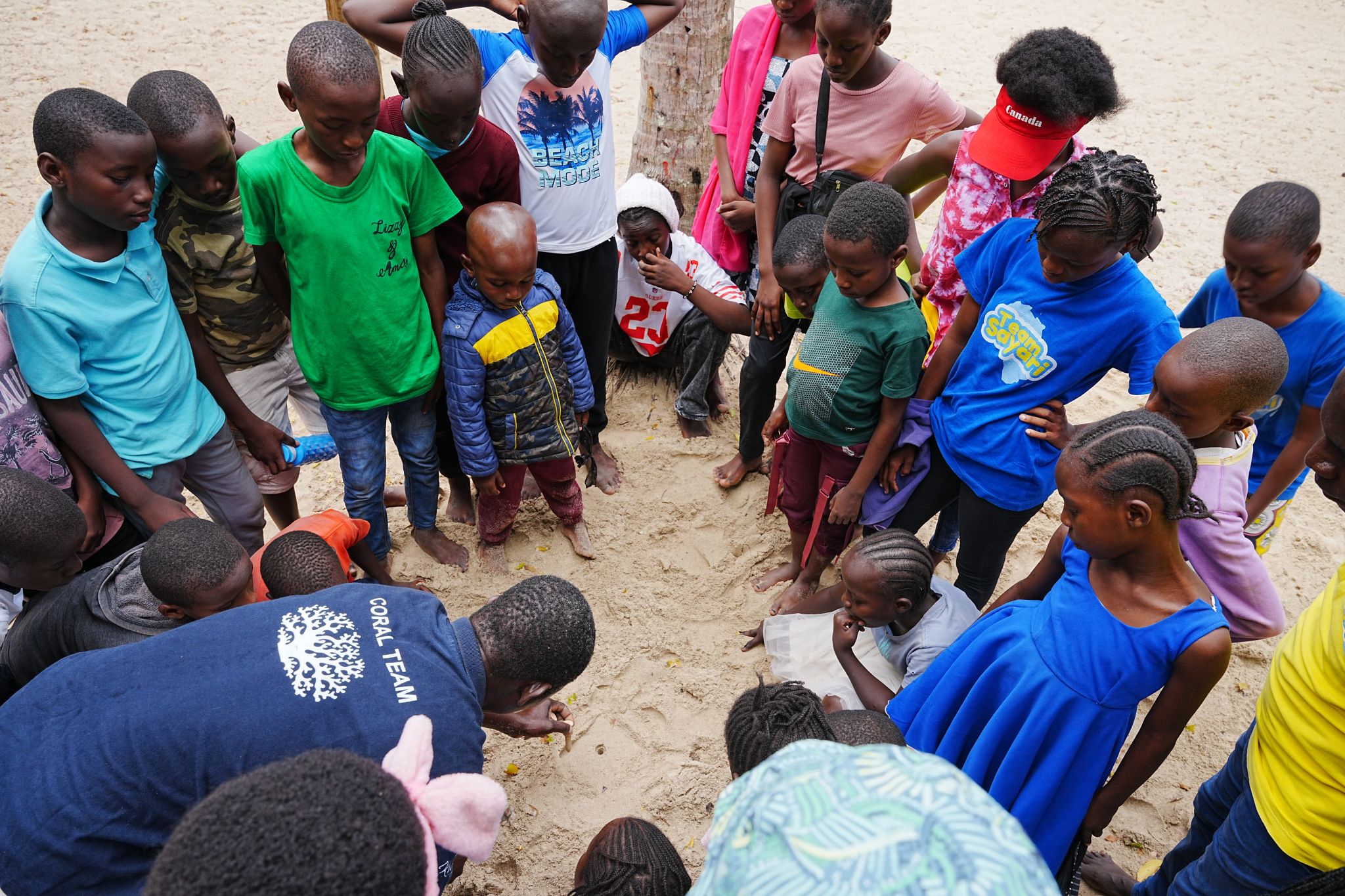
Youth for Oceans (Y4O) bringing 10,000+ students to the living classroom at Kuruwitu across 50 schools.
Global Ambassador Training
300+ international students, 40+ interns, and 15 filmmakers trained to advocate for coastal fisheries globally.
Fisher Folk Academy
Leadership development and citizen science building community capacity for long-term stewardship.
The Ocean as a Classroom
Kuruwitu isn't just a marine sanctuary - it's a living classroom where conservation becomes real. Every year, students from across Kilifi County arrive to snorkel above coral gardens, identify reef species, and hear stories from community divers about what the reef looked like before, and what it looks like now. This is ocean literacy rooted in living evidence, not textbook theory.
Since 2016, Oceans Alive has walked alongside coastal communities to turn their vision for a healthy ocean into reality. We don't just teach - we build learning platforms where knowledge flows in every direction: from elders to youth, from fishers to scientists, from Kuruwitu to the world.
Education here is cross-cutting and intergenerational. When primary school children plant corals alongside certified community divers, when international students learn permaculture from Mama Karanga women, when African Leadership University students document fisher stories through Project REEL - that's when conservation becomes a movement, not a project.
Youth for Oceans (Y4O)
Building Ocean Ambassadors from Kilifi to the World
Over 10,000 school children have stepped into the ocean at Kuruwitu. Not as tourists, but as learners. They've planted corals with community divers, documented marine species, learned permaculture from LIFT Network women, and carried those lessons home.
Seven schools now partner directly with the Y4O program for long-term coral management and restoration education. International students - 300 from Europe and North America, 13 from African Leadership University - arrive to learn, then leave as ambassadors lobbying for sustainable coastal fisheries management globally. Fifteen filmmakers have been trained to tell these stories. Ten films have reached screens worldwide.
Project REEL Kilifi
Intergenerational knowledge doesn't live in reports - it lives in stories. Project REEL trains young filmmakers to document fisher voices, community wisdom, and the Kuruwitu journey. These aren't promotional videos; they're living archives of what works, what failed, and why it matters.
Fisher Folk Academy
What began at Kuruwitu is now recognized on world stages. The Fisher Folk Academy represents a model that centers community leadership, not external consultants. From IUCN conferences in Marseille, Monaco, and the Asia-Pacific region to the 2022 Blue Champions Award, the world is watching - and learning.
Citizen science & community monitoring
Community members, students and visitors contribute to monitoring and research through toolkits, templates and educational materials, supporting conservation across the Kilifi County BMU network.